
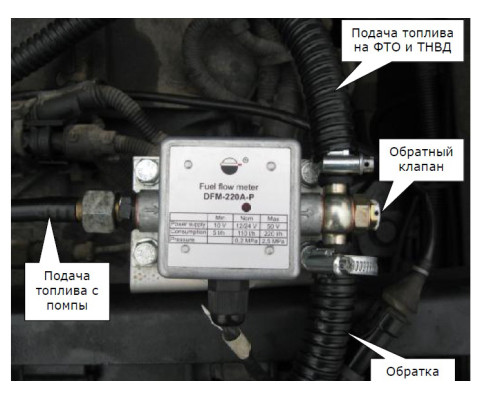

Fuel Flow Sensor Installation


 payment on account
 In cash
Fuel flow sensor installation is a specialized service designed for precise monitoring of fuel consumption in various types of transport and special equipment. This solution allows for effective control of fuel usage, detection of unauthorized siphoning, and optimization of operational costs. The installation process requires in-depth knowledge and experience with vehicle and equipment fuel systems.
How does the service work? Our specialists perform comprehensive work, including: diagnostics of the fuel system, selecting the optimal location for sensor mounting (typically in the supply and return lines for differential data, or in a Common Rail system), careful integration of the sensor into the fuel line, connecting it to a monitoring system (e.g., a GPS tracker or telematics platform), and, crucially, subsequent calibration. Fuel flow sensor calibration ensures maximum accuracy of readings, taking into account the individual characteristics of each piece of equipment. Identical models may have different fuel pumps and lines, requiring a customized approach to selecting the return point and the method of bypass valve installation. We use modern equipment and techniques to guarantee the reliability and longevity of the installed systems.
This solution is aimed at a wide range of clients: from owners of agricultural machinery (tractors, combines) and heavy-duty trucks to enterprises operating locomotives, special construction equipment, and stationary diesel generators. Key use cases include: reducing fuel costs, preventing fuel theft, increasing fleet efficiency, accurate fuel budget planning, and obtaining reliable data for analytics and reporting. If you need precise fuel tracking and professional flow meter setup, our experts are ready to assist.
We have extensive experience working with both simple fuel systems (rotary injection pumps) and more complex and modern ones, such as unit injectors and Common Rail systems. Our team is ready to perform fuel flow sensor installation and calibration on various types of vehicles, ensuring fuel consumption monitoring and long-term savings.
🎁 Expert Advice Before installing a fuel flow sensor, ensure your vehicle or equipment's fuel system is in good working order. Malfunctions can distort readings and make the data irrelevant for analysis.
💡 FAQ
❓ Why is fuel flow sensor installation necessary?
Installing a sensor allows for precise monitoring of fuel consumption, detecting unauthorized siphoning, optimizing routes and operating modes of equipment, and significantly reducing operating costs.
❓ What types of vehicles do you install sensors on?
We install sensors on a wide range of equipment, including tractors, combines, heavy-duty trucks, locomotives, construction machinery, and stationary diesel generators.
❓ Is calibration required after installation?
Yes, calibration is an essential step after sensor installation. It allows the system to be configured for specific equipment and fuel systems, ensuring maximum accuracy and reliability of fuel consumption readings.
❓ Can I install the sensor myself?
Fuel flow sensor installation requires specialized knowledge and experience with fuel injection equipment. Improper installation or calibration can lead to incorrect readings, damage to the fuel system, or even fire. It is recommended to entrust this work to qualified specialists.
❓ How long does the installation take?
Installation time depends on the type and complexity of the vehicle's fuel system. On average, the process takes from several hours to a full workday, including mounting and calibration.
There are no reviews for this product, be the first to leave your review.
No questions about this product, be the first and ask your question.