


 payment on account
 In cash
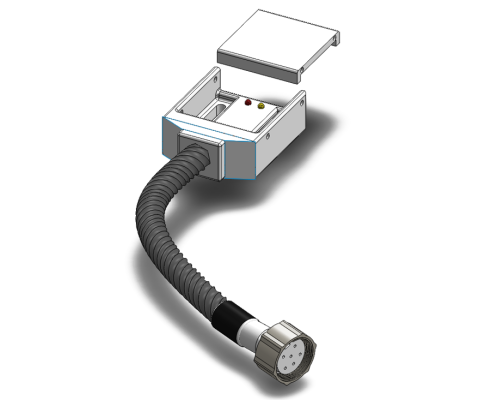
The shaft rotation counter sensor is an indispensable element in modern automation and control systems, designed for precise monitoring of the rotational speed of various mechanisms. Its operating principle is based on converting mechanical rotational motion into electrical pulses. Depending on its type, the sensor may use inductive, optical, or Hall effect principles to detect the passage of gear teeth, blades, or other markings on the rotating shaft. These pulses are then transmitted to controllers or counters, providing continuous monitoring and feedback.
This solution is aimed at a wide range of enterprises where precise control over equipment operation is required. It is ideal for use in pumping stations, dosing systems, mixers, conveyor belts, production lines, as well as in ventilation and heating systems where maintaining a specific rotational speed is crucial. Purchasing a shaft rotation counter sensor means ensuring high reliability and accuracy in controlling technological processes. A robust housing made of high-quality materials (e.g., stainless steel or reinforced plastic) ensures durability and resistance to aggressive environments and mechanical loads, which is critically important for industrial conditions. Many models feature a high degree of protection against dust and moisture (e.g., IP67/IP68), guaranteeing stable operation in challenging environments. Installation of the shaft rotation sensor is straightforward and does not require specialized tools, and its universal compatibility allows for easy integration into existing systems. The use of such sensors significantly increases the efficiency, safety, and accuracy of equipment operation.
🎁 Expert Advice When installing a shaft rotation counter sensor, always check the recommended gap between the sensing part of the sensor and the rotating element. Too large a gap can lead to missed pulses and inaccurate measurements, while too small a gap can cause mechanical damage to the sensor.
💡 FAQ What operating principle is used in a shaft rotation sensor? Most shaft rotation sensors use inductive, optical, or Hall effect principles to detect rotation and generate electrical pulses. The choice depends on the specific application and accuracy requirements.
❓ Where are shaft rotation counter sensors most commonly applied?
These sensors are widely used in industrial automation systems, on conveyor lines, in pumping equipment, mixers, CNC machines, and ventilation systems for monitoring speed and position.
❓ How do I correctly connect a shaft rotation sensor to a controller?
Connection is typically made via a three- or four-wire scheme (power, ground, signal output). It's important to observe polarity and use shielded cable to minimize interference. The specific wiring diagram is always provided in the manufacturer's instructions.
❓ What is the measurement accuracy of these types of sensors?
Measurement accuracy depends on the sensor type, the number of pulses per revolution, and the quality of installation. Modern sensors provide high repeatability and accuracy sufficient for most industrial tasks.
❓ Can the sensor be used in conditions of high humidity or dust?
Yes, many industrial shaft rotation counter sensors have a high IP protection rating (e.g., IP67 or IP68), allowing them to operate in conditions of high humidity, dust, and even temporary submersion in water.
There are no reviews for this product, be the first to leave your review.
No questions about this product, be the first and ask your question.